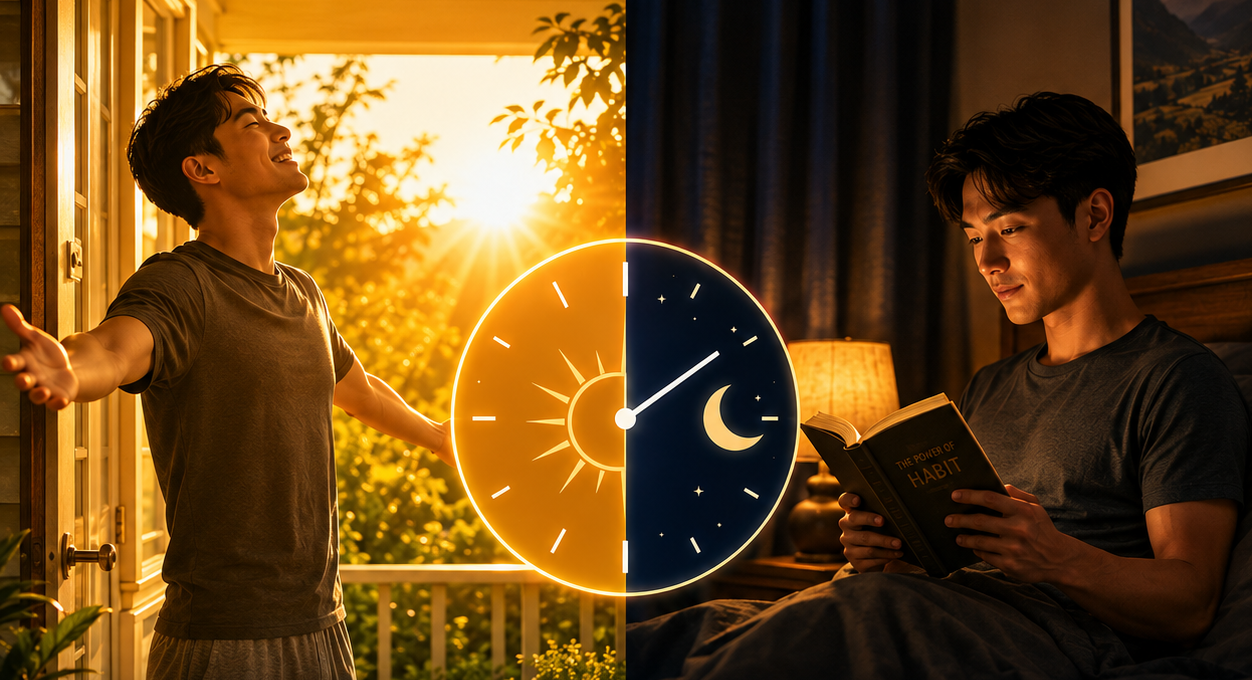
If you’ve ever felt wired at midnight but foggy all afternoon, the problem probably isn’t your coffee habit or your willpower — it’s your light exposure. Every cell in your body runs on an internal clock, and that clock is set almost entirely by light. Get the timing right, and you unlock steady energy, better sleep, and a mood that doesn’t crash by 3 p.m. Get it wrong — which most Americans do, thanks to fluorescent-lit offices, late-night screens, and blackout curtains — and you’re fighting your own biology every single day.

This guide breaks down exactly how morning sunlight and nighttime darkness regulate cortisol and melatonin, the two hormones that control your energy, focus, and sleep. More importantly, it gives you a practical, US-lifestyle-friendly plan to use light as a tool instead of an accident.
What Is a Circadian Rhythm, Really?
Your circadian rhythm is a roughly 24-hour internal clock, run by a cluster of neurons in your brain called the suprachiasmatic nucleus (SCN), located in the hypothalamus. Think of the SCN as your body’s master timekeeper — it tells your organs when to release hormones, when to raise body temperature, when to digest food, and when to prepare for sleep.
The SCN doesn’t run on guesswork. It takes its cues primarily from light hitting your eyes. Specialized cells in your retina detect brightness and color temperature and send that signal straight to the SCN, which then adjusts your hormone production in real time. This is why light — not caffeine, not willpower — is the single most powerful lever you have over your daily energy levels.
The Two Hormones That Run the Show
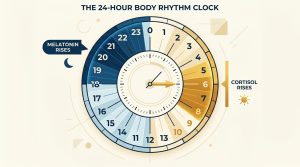
- Cortisol – Often mislabeled as just a “stress hormone,” cortisol is actually your body’s natural alarm clock. A healthy cortisol curve spikes shortly after waking (called the Cortisol Awakening Response) to give you alertness and drive, then gradually tapers throughout the day.
- Melatonin – Produced by the pineal gland, melatonin is the hormone that signals “it’s time to wind down.” It rises in the evening as darkness falls and stays elevated through the night to support deep, restorative sleep.
These two hormones work like a seesaw. When cortisol is high, melatonin should be low, and vice versa. Light exposure is what keeps that seesaw balanced — or throws it completely out of sync.
Why Morning Sunlight Is Your Most Underrated Energy Tool
It Triggers the Cortisol Awakening Response
Within the first 30-60 minutes after waking, your body naturally produces a burst of cortisol meant to help you feel alert and motivated. Exposure to bright natural light — ideally sunlight, not a phone screen or an indoor lamp — amplifies and sharpens this response. Research in chronobiology consistently shows that people who get outdoor light early report better mood, faster reaction times, and less daytime fatigue than those who stay indoors under artificial lighting.
It Resets Your Internal Clock Every Single Day
Your circadian rhythm isn’t exactly 24 hours — for most people it runs slightly longer. Morning sunlight acts like a daily “reset button,” pulling your internal clock back in sync with the actual day-night cycle. Skip this reset (say, by working in a windowless office and driving to work before sunrise, common for many US commuters), and your rhythm can drift later and later — a big reason so many people feel like natural night owls even when they’d rather not be.
It Sets the Countdown Timer for Melatonin
Here’s the part most people miss: morning light exposure directly determines what time your body releases melatonin that night. Roughly 14-16 hours after your first bright light exposure, your pineal gland begins ramping up melatonin production. Get sunlight at 7 a.m., and you’re primed to feel sleepy around 9-11 p.m. Sleep in with the blinds closed until 10 a.m., and that melatonin release — along with your natural bedtime — pushes later too.
How to Get Morning Light in a Real American Schedule
You don’t need to meditate on a mountaintop. A few practical options:
- Walk or bike part of your commute, even 10 minutes, instead of driving door-to-door.
- Drink your coffee outside on the porch, balcony, or even in a parked car with the window down.
- Take the dog out for a longer loop instead of a quick driveway trip.
- Sit by an east-facing window during breakfast if getting outside isn’t possible.
- Use a 10,000-lux light therapy box for 20-30 minutes if you live somewhere with long winters or limited sunrise access, such as the Pacific Northwest or the Upper Midwest.
Aim for 10-30 minutes of outdoor light exposure, ideally within an hour of waking. Cloudy days still work — outdoor light on an overcast morning is far brighter than any indoor lighting.

Why Nighttime Light Sabotages Your Sleep
Blue Light and Melatonin Suppression
Modern life is full of bright, blue-enriched light after dark: overhead LED lighting, laptop and TV screens, and phone notifications scrolled in bed. Blue wavelengths (around 460-480 nm) are especially effective at suppressing melatonin production because the same retinal cells that respond to morning sunlight are highly sensitive to that exact wavelength — regardless of the hour.
Studies on evening screen use have found that just two hours of bright device exposure before bed can meaningfully delay melatonin onset, pushing your natural bedtime later and reducing total sleep time.
It’s Not Just About Sleep Quantity
Even if you technically get eight hours in bed, bright light exposure at night can:
- Delay the timing of deep sleep stages
- Reduce next-morning cortisol response, leaving you groggy
- Increase nighttime awakenings
- Create a chronic mismatch between your internal clock and your actual schedule — sometimes called “social jet lag”
Common US Lifestyle Culprits
- Scrolling on a phone in bed (the classic “doomscrolling” habit)
- Bright kitchen and bathroom overhead lighting during a 10 p.m. snack
- Streaming a show on a bright TV in a dark room, which increases contrast sensitivity
- Late-night desk work under cool-white LED office lighting
- Nightlights or hallway lights that are white or blue rather than warm-toned
How to Reduce Nighttime Light the Practical Way
- Dim the lights in your home starting 2-3 hours before bed. Use lamps instead of overhead fixtures.
- Switch to warm bulbs (2700K or lower) for evening lighting — widely available at any US hardware store.
- Enable night mode / blue light filters on phones and laptops, and lower screen brightness manually as well.
- Try blue-light-blocking glasses in the evening if screen use is unavoidable for work.
- Blackout curtains for the bedroom itself, especially useful in cities with heavy street lighting.
- Swap white nightlights for red or amber ones, which have minimal impact on melatonin.
Building a Simple Daily Light Routine
You don’t need a lab-grade lighting setup to feel the benefits. A realistic, US-lifestyle routine looks like this:
Morning (Within 1 Hour of Waking)
Get outside for 10-30 minutes of natural light — coffee on the porch, a short walk, or time in the car with the window down on the drive to work.
Midday
Take a lunch break outside when possible, even just 10 minutes in a parking lot or courtyard. Midday light exposure reinforces your rhythm and helps counteract the effects of indoor office lighting.
Late Afternoon / Early Evening
No major changes needed — normal indoor lighting is fine. This is typically when cortisol has tapered and energy naturally dips slightly (the classic “afternoon slump”).
Evening (2-3 Hours Before Bed)
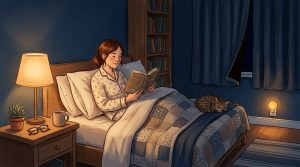
Dim overhead lights, switch to warm lamps, reduce screen brightness, and avoid scrolling in bed. This is the window where melatonin production should be ramping up uninterrupted.
Bedtime
Keep the bedroom fully dark — blackout curtains, no glowing electronics, and a red or amber nightlight if needed for navigation.

The Bottom Line: Light Is Free, Powerful, and Underused
Your energy levels, focus, and sleep quality aren’t random — they’re the direct output of a hormone system that takes its orders from light. Bright morning sunlight tells your body “wake up and perform.” Dim, warm evening light tells it “wind down and repair.” Most fatigue, afternoon crashes, and restless nights aren’t a willpower problem; they’re a light-timing problem.
The good news is that fixing it costs nothing. You don’t need a new mattress, a supplement stack, or a sleep-tracking ring to start seeing results — you need ten minutes of morning sun and a dimmer evening.
Ready to reset your energy? Start tomorrow morning: step outside within an hour of waking, even for just ten minutes, and dim your lights tonight two hours before bed. Track how you feel for one week — most people notice a difference in energy and sleep within just a few days.