Introduction
There’s a reason chicken salad shows up at nearly every summer potluck, church picnic, and Sunday brunch table across the United States. It’s creamy, satisfying, endlessly customizable, and — best of all — one of the easiest ways to turn leftover rotisserie chicken into something genuinely craveable. But if you’ve ever ended up with a bowl of bland, watery, or overly mayo-heavy chicken salad, you know that “easy” doesn’t always mean “foolproof.”
This guide walks you through exactly how to make chicken salad that rivals your favorite deli or farmers market stand — from choosing the right chicken to nailing the texture, seasoning, and mix-ins that make it your own. Whether you’re meal-prepping lunches for the week, packing a picnic basket, or building the perfect sandwich, this recipe has you covered.
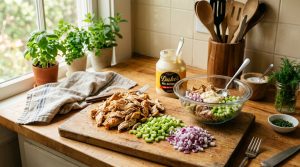
Why Chicken Salad Is a Timeless American Staple
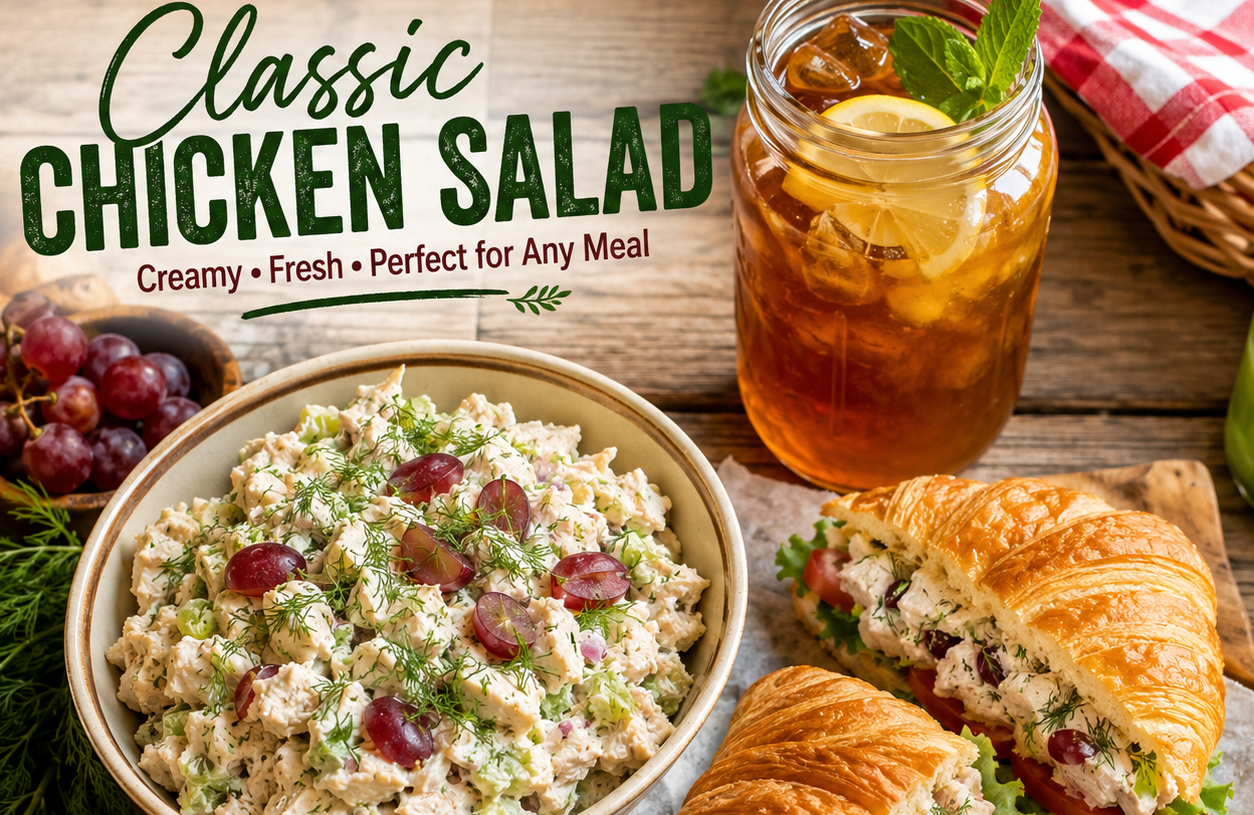
Chicken salad has deep roots in American food culture, tracing back to New England tea rooms in the late 1800s. Today, it’s a fixture at diners, delis, and family gatherings from coast to coast — served on croissants in the South, piled onto rye in the Northeast, or scooped straight from the bowl at a backyard barbecue in the Midwest.
Part of its enduring popularity is versatility. Chicken salad can be:
- A quick weeknight dinner solution
- A make-ahead lunch for busy work weeks
- A crowd-pleasing potluck dish
- A protein-packed, low-carb option when served over greens
What Makes a Great Chicken Salad?
The best chicken salad balances four things: tender, well-seasoned chicken; a creamy but not soupy dressing; crunchy texture from fresh vegetables; and a hit of acidity or sweetness to keep every bite interesting.
Choosing and Preparing Your Chicken
Best Chicken Options for Chicken Salad
You have several solid options, and the right one depends on how much time you have:
- Rotisserie chicken — The fastest and most flavorful shortcut. Grocery store rotisserie chicken (a staple at chains like Costco, Kroger, and Publix) is already seasoned and juicy.
- Poached chicken breast — Gently simmering chicken breasts in broth keeps them tender and moist, which is key to avoiding dry, stringy salad.
- Baked chicken thighs — Slightly richer in flavor and more forgiving than breasts if you’re worried about overcooking.
- Leftover roasted chicken — A smart way to use up Sunday dinner leftovers.
How to Shred or Chop Chicken the Right Way
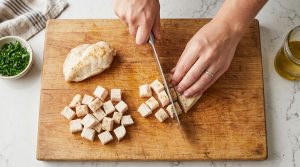
Texture matters more than most home cooks realize. For classic, deli-style chicken salad, chop the chicken into small, even ½-inch cubes rather than shredding it — this gives every bite a more substantial, satisfying bite instead of stringy mush. If you prefer a softer, more spreadable texture (great for sandwiches), shredding with two forks works well.
The Perfect Chicken Salad Base: Dressing and Seasoning
Classic Mayonnaise-Based Dressing
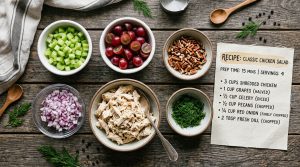
The traditional American chicken salad dressing starts with good-quality mayonnaise — Duke’s and Hellmann’s are popular go-to brands among home cooks in the South and Northeast, respectively. For every 3 cups of chopped chicken, start with:
- ½ cup mayonnaise
- 1 tablespoon Dijon mustard
- 1 tablespoon fresh lemon juice
- Salt and black pepper to taste
Lighter and Alternative Dressing Options
If you’re looking to cut calories or add tang, try these popular swaps:
- Greek yogurt — Replace half or all of the mayo for a protein-boosted, tangier version.
- Avocado — Mash in half an avocado for a creamy, dairy-free twist.
- Buttermilk ranch — A Southern favorite that adds herby depth.
Seasoning Tips That Make a Difference
Don’t just rely on salt and pepper. A pinch of garlic powder, smoked paprika, or celery seed can elevate a basic recipe into something memorable. Taste as you go, and season the chicken itself, not just the dressing — this ensures flavor in every bite, not just on the surface.

Building the Perfect Mix-Ins
Classic Crunch: Celery and Onion
Finely diced celery and red onion are the backbone of traditional American chicken salad, providing essential crunch and a mild bite that cuts through the richness of the mayo.
Sweet and Savory Add-Ins
For a more dynamic flavor profile, consider:
- Halved red grapes or dried cranberries for natural sweetness
- Toasted pecans or slivered almonds for crunch and nuttiness
- Diced apple for a fresh, crisp contrast
- Fresh dill, tarragon, or chives for an herby lift
Regional American Variations
- Southern-style: Sweet pickle relish, a touch of sugar, and pecans
- California-style: Avocado, cilantro, and lime
- Buffalo-style: Hot sauce and blue cheese crumbles, popular at sports bars and tailgates