
Introduction
Every day, thousands of truckers travel America’s highways carrying the products that keep businesses running and store shelves stocked. From food and medical supplies to construction materials and consumer goods, truck drivers play a critical role in the U.S. economy.
Yet, despite how important trucking is, many people only notice truckers when they are stuck behind a slow-moving tractor-trailer or waiting for a truck to merge.
The reality is that life behind the wheel is far more demanding than it may appear. Long hours, unpredictable traffic, tight delivery schedules, weather conditions, and constant responsibility are just part of the job.
So, what do truckers wish everyone else understood?
Here are five things every trucker wants you to know—and understanding them can make America’s roads safer and less stressful for everyone.
1. Truckers Can’t Stop or Turn Like a Car
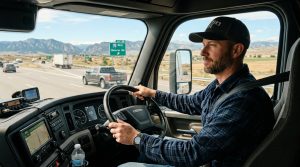
One of the biggest misunderstandings about commercial trucks is how quickly they can react.
A fully loaded tractor-trailer can weigh up to 80,000 pounds under federal weight limits, depending on the configuration and circumstances. That enormous weight affects acceleration, braking, turning, and maneuverability.
Give Trucks Extra Space
If a truck is following you, changing lanes, or approaching an intersection, remember that it needs significantly more room than a passenger vehicle.
For example, if you suddenly cut in front of a truck and slam on the brakes, the truck driver may not have enough distance to stop safely.
A safer approach is simple:
- Avoid cutting directly in front of a truck.
- Leave plenty of following distance.
- Don’t brake suddenly after passing a truck.
- Give trucks enough room when they merge.
- Be patient when a truck needs additional space.
Why Truck Drivers Sometimes Need Multiple Lanes
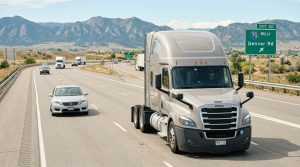
Large trucks have large blind spots, especially alongside the trailer and near the rear of the vehicle. A truck driver may not be able to see a smaller vehicle positioned in one of these areas.
If you cannot see the truck’s side mirrors, there’s a good chance the truck driver cannot see you either.
Practical tip: Pass decisively when it is safe, and avoid lingering beside a truck for an extended period.
2. Truckers Are Working Under Tight Schedules
When you see a truck traveling on the highway, it may be carrying a shipment that needs to arrive at a specific location within a scheduled delivery window.
That doesn’t mean the driver is trying to rush.
In fact, professional truck drivers operate under numerous rules and logistical constraints.
Traffic Can Destroy a Delivery Schedule
A truck driver can carefully plan a route and still encounter:
- Interstate traffic
- Construction zones
- Accidents
- Severe weather
- Road closures
- Detours
- Loading delays
- Unloading delays
- Parking shortages
A 30-minute traffic jam can have consequences for the rest of the driver’s route.
Delivery Windows Matter
Many shipments are scheduled around specific appointments. A truck arriving late may affect warehouses, distribution centers, retailers, manufacturers, and other businesses.
This is particularly important for time-sensitive freight such as refrigerated food, frozen products, medical supplies, and other temperature-sensitive cargo.
The next time you see a truck trying to merge or maintain a steady speed, remember that the driver may be working against a schedule that started hundreds of miles away.

3. Truck Stops Are More Than Just Places to Get Fuel
For people who don’t drive professionally, a truck stop might look like nothing more than a large gas station.
For truckers, it’s often much more important.
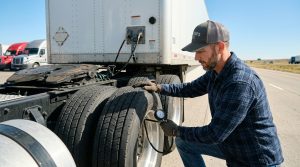
A truck stop can be a place to eat, shower, refuel, perform basic vehicle checks, make phone calls, handle paperwork, and—most importantly—get some rest.
Finding Parking Can Be a Serious Challenge
One of the most frustrating parts of long-haul trucking is finding safe parking.
A driver may reach the end of a long driving shift only to discover that available truck parking is limited or completely full.
That can create additional stress because parking isn’t simply a convenience. Drivers need a safe and legal place to stop and rest.
Rest Is Part of Safe Driving
Professional truck drivers need adequate rest to stay alert.
Federal hours-of-service regulations are designed to limit driving time and require specific rest periods. These rules are an important part of reducing fatigue-related crashes.
So when a truck is parked instead of moving, the driver isn’t necessarily wasting time.
They may be doing exactly what they need to do to operate safely.

4. Truckers Deal With Weather and Road Conditions Too
Truck drivers don’t get to choose perfect weather every day.
They may start a trip in sunny California, encounter heavy rain in Texas, freezing temperatures in the Midwest, and snow somewhere farther north—all during the same trip.
Bad Weather Changes Everything
Rain can reduce visibility and increase stopping distances.
Snow and ice can make highways dangerous.
Strong winds can affect high-profile vehicles.
Fog can make it difficult to see traffic and road hazards.
In these situations, a professional driver may reduce speed or create additional space around the truck.
Slow Doesn’t Always Mean Inexperienced
If a truck is moving below the posted speed limit during severe weather, there may be a very good reason.
A truck carrying a heavy load has different handling characteristics than a passenger car. Conditions that feel manageable in a sedan can become significantly more dangerous in a large commercial vehicle.
The best thing other drivers can do is give the truck extra space and avoid aggressive passing or sudden lane changes.

5. Truckers Are People, Not Just the Vehicle in Front of You
Perhaps the most important thing truckers want other drivers to understand is that there is a real person behind the wheel.
That person may be spending days or weeks away from home.
They may be missing birthdays, holidays, family dinners, school events, and other important moments.
Long-Haul Trucking Can Be Lonely
Long-distance drivers can spend countless hours alone inside their trucks.
Their workplace is also their living space for much of the trip.
They have to manage driving, navigation, fueling, meals, rest, maintenance, paperwork, and delivery responsibilities—often while being far from family and friends.
A Little Courtesy Goes a Long Way
You don’t need to do anything complicated to make the road better for truckers.
Simple actions can make a difference:
- Let a truck merge when traffic conditions allow.
- Avoid aggressive driving around large vehicles.
- Don’t stay in a truck’s blind spot unnecessarily.
- Give trucks plenty of stopping distance.
- Be patient when a truck is climbing a hill.
- Move over when appropriate for stopped roadside vehicles.
- Remember that the driver is doing a job that supports millions of people.
A little patience can make a long day on the highway much safer for everyone.

What Other Drivers Can Do to Make Highways Safer
Understanding truckers is only the first step. Drivers can actively make highways safer by practicing defensive driving around commercial vehicles.
Keep a Safe Following Distance
Don’t follow a truck too closely. You need enough space to see what’s happening ahead and react if traffic suddenly slows.
Pass Safely
When passing a tractor-trailer, make sure you have enough space and visibility. Once you’ve safely passed, don’t immediately move back into the truck’s lane.
Avoid Distracted Driving
Looking at a phone for even a few seconds can create a dangerous situation when you’re traveling at highway speeds.
Keep your attention on the road, especially when driving near large commercial vehicles.
Be Patient
A truck may accelerate slowly, take longer to merge, or need additional room to make a turn.
What may seem like a minor inconvenience to a passenger-car driver can be a serious safety issue for a professional truck driver.
Why Truckers Matter to America
Nearly every product people buy has spent some portion of its journey on a truck.
Groceries, furniture, clothing, electronics, building materials, medical supplies, and countless other products depend on America’s trucking network.
Truck drivers connect manufacturers with warehouses, warehouses with retailers, ports with distribution centers, and businesses with customers.
Without trucking, the supply chain would slow dramatically.
The next time you see a semi-truck on an American highway, remember that you’re not simply looking at a large vehicle.
You’re looking at one part of the transportation system that helps keep the country moving.

Conclusion
Truckers spend long hours navigating America’s highways, managing heavy equipment, meeting delivery schedules, dealing with unpredictable weather, and staying focused on safety.
The next time you’re driving beside a tractor-trailer, remember these five things:
- Trucks need more stopping and maneuvering space.
- Truckers often work under strict delivery schedules.
- Truck stops and rest periods are essential to safe operations.
- Weather and road conditions can dramatically affect truck driving.
- Every truck driver is a person doing an important job.
A little patience and awareness can make a significant difference.
The next time you share the road with a truck, give the driver space, stay alert, and remember that you’re sharing the road with someone helping keep America’s economy moving. Share this article with another driver and help make America’s highways safer for everyone.
